Introduction
Every commercial or industrial HVAC system depends on properly functioning coils to maintain efficiency, comfort, and reliability. Whether your system uses hot water, chilled water, DX, condenser, or evaporator coils, their performance directly determines how effectively heat is transferred. When coils fail or degrade, energy efficiency declines, maintenance costs increase, and downtime becomes a real risk.
This guide explains everything you need to know about replacement HVAC coils—including coil types, materials, design considerations, and what to look for in a manufacturer when it’s time for a replacement.
Why HVAC Coils Matter in Commercial Systems
HVAC coils perform one of the most critical tasks in a mechanical system: transferring heat between air and refrigerant or water. Over time, factors such as corrosion, mechanical stress, fouling, and environmental exposure can cause coils to lose efficiency or fail altogether.
In commercial applications—where uptime and energy efficiency are priorities—replacement coils aren’t simply a repair item; they’re a strategic investment. Properly designed and fabricated coils ensure:
-
Optimal heat exchange efficiency
-
Reduced energy consumption
-
Longer system life
-
Consistent airflow and temperature control
-
Minimal operational interruptions
Types of Replacement HVAC Coils
Understanding the main coil categories helps in specifying or ordering replacements accurately.
1. Chilled Water Coils
Used for cooling air in large HVAC systems, chilled water coils use circulated water as the cooling medium. Efficient coil design ensures maximum surface contact between air and water for optimal temperature reduction.
2. Hot Water Coils
Hot water coils transfer heat from circulated hot water to the airstream for heating applications. These are common in hydronic systems and are often built to handle variable flow and temperature ranges.
3. Condenser Coils
Located in outdoor units, condenser coils reject heat from the refrigerant to the outside air. Because they’re exposed to the elements, corrosion-resistant materials and protective coatings are crucial for long-term reliability.
4. Evaporator Coils
Found on the cooling side of direct expansion (DX) systems, evaporator coils absorb heat from the air into the refrigerant. Proper circuiting, fin spacing, and tube design are essential for even refrigerant distribution and system performance.
5. Steam Coils
Steam coils are used for high-temperature heating in process or comfort applications. They must be designed with proper tube wall thickness and condensate management to avoid water hammer or uneven heating.
Each type of coil has unique design criteria and operating conditions. Selecting or fabricating a replacement requires matching both performance and physical dimensions precisely.
When Replacement Becomes Necessary
Coils can operate reliably for years with regular maintenance, but eventually, replacement becomes unavoidable. Common reasons include:
-
Corrosion or Tube Leaks: Caused by chemical exposure, poor water treatment, or environmental conditions.
-
Fouling and Blockage: Accumulated debris restricts airflow or water flow, reducing capacity.
-
Fin Degradation: Bent or deteriorated fins reduce heat transfer surface area.
-
Mechanical Damage: Vibration or improper cleaning can deform coil geometry.
-
Obsolete OEM Parts: When original manufacturer coils are discontinued or unavailable.
In many cases, custom replacement coils fabricated to match the original design—or improve upon it—are the fastest and most reliable solution.
Material and Design Considerations
Material selection is critical for coil performance, longevity, and cost-efficiency.
-
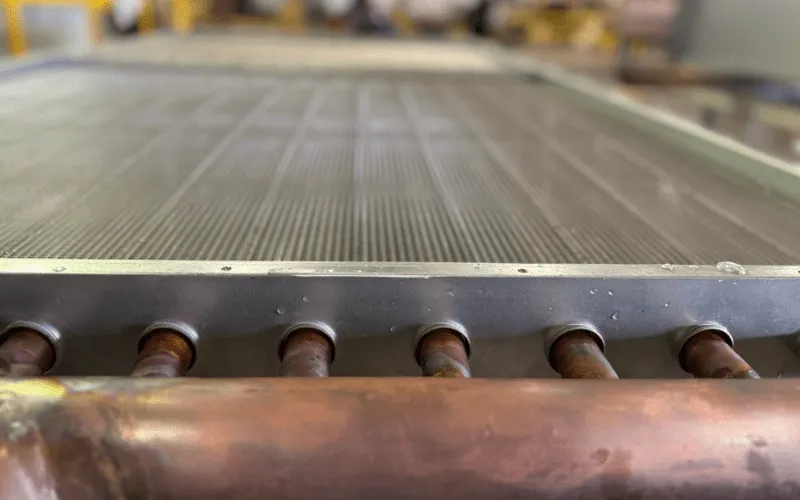
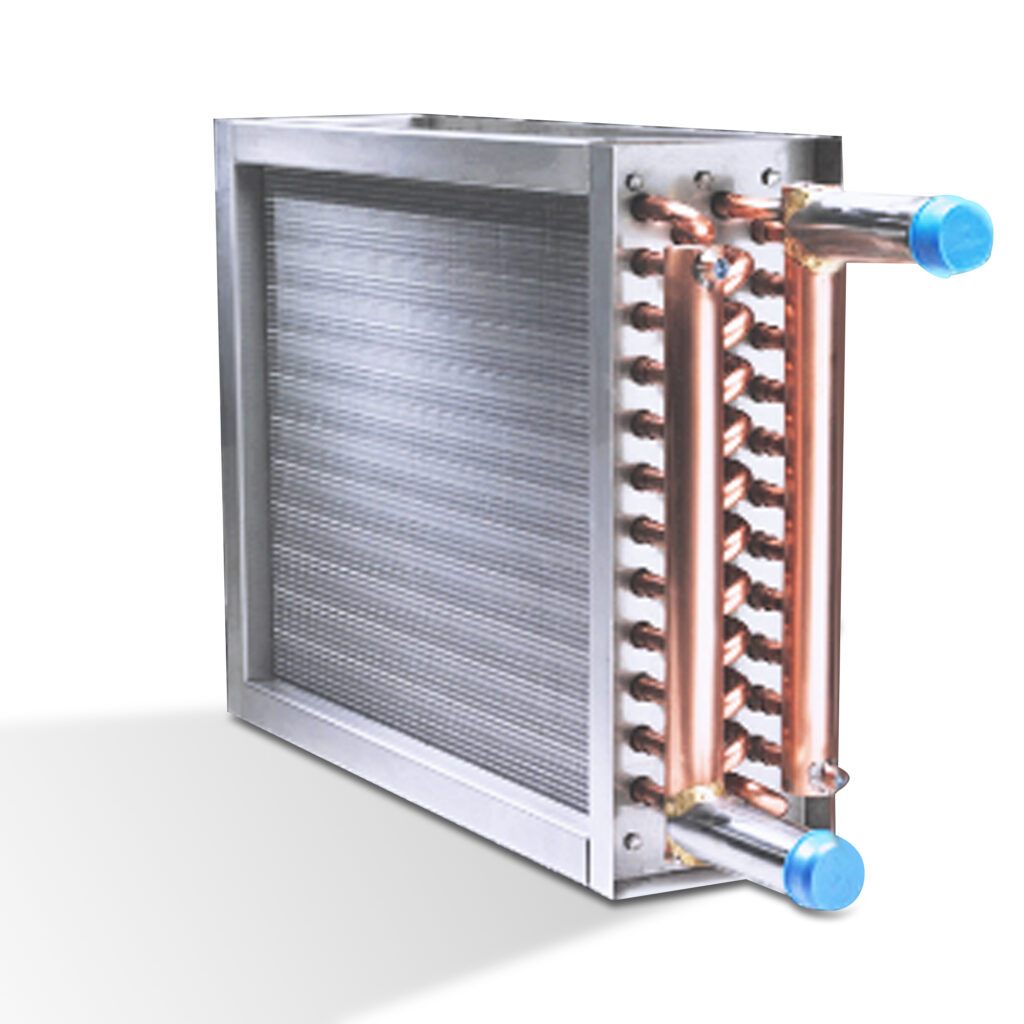
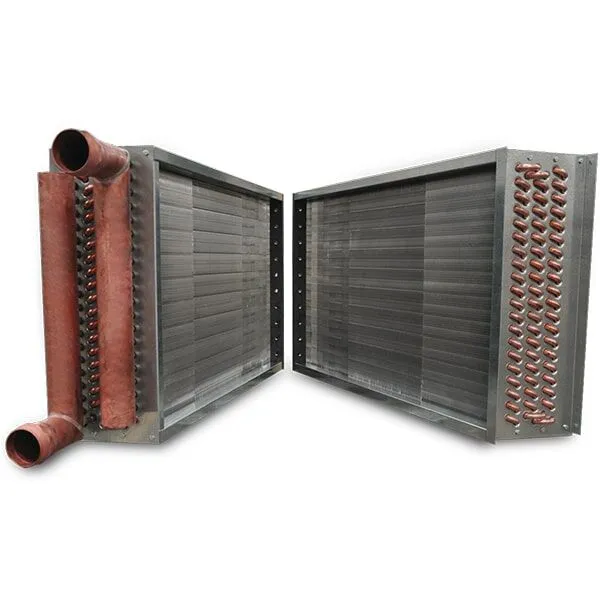
Copper Tubes and Aluminum Fins: The most common configuration for commercial HVAC applications due to excellent thermal conductivity and cost balance.
-
All-Copper Coils: Offer maximum durability and corrosion resistance, ideal for coastal or industrial environments.
-
Copper-Nickel Tubes: Used in high-pressure or corrosive water applications.
-
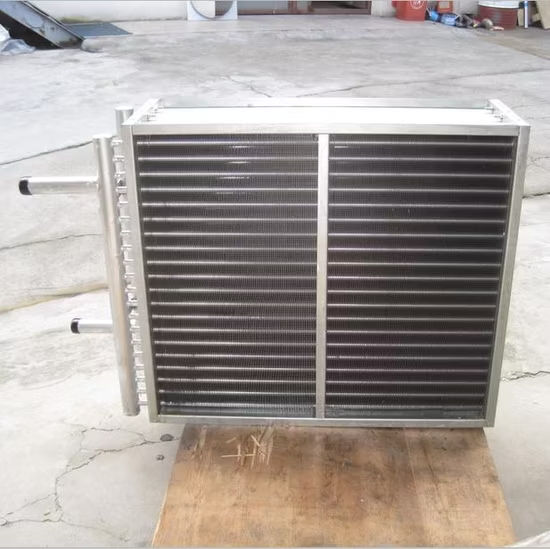
Stainless Steel Construction: Suitable for harsh chemical or process environments where corrosion resistance is essential.
Key design factors include:
-
Tube Diameter and Wall Thickness: Determines capacity and pressure tolerance.
-
Fin Density: Affects heat transfer rate and air pressure drop.
-
Circuiting and Headers: Must be engineered to ensure proper fluid or refrigerant distribution.
-
Face and Fin Dimensions: Must match existing system geometry for seamless fit and installation.
A professional coil manufacturer will match the original coil’s footprint while optimizing design and materials to improve performance.
The Benefits of Custom Coil Fabrication
Off-the-shelf replacement coils rarely match the exact specifications of older or specialized HVAC systems. Custom coil fabrication provides a tailored solution—replicating or upgrading the existing design to meet performance goals without requiring major system modifications.
Benefits include:
-
Precision Fit: Built to match exact physical dimensions and connection locations.
-
Improved Efficiency: Updated designs can increase heat transfer without changing system size.
-
Reduced Downtime: Fabricated and shipped quickly to minimize disruption.
-
Compatibility with Legacy Equipment: Perfect for discontinued or hard-to-source OEM models.
-
Material Upgrades: Options for enhanced corrosion resistance or higher pressure ratings.
Choosing a U.S.-based manufacturer with in-house design and fabrication capabilities ensures faster turnaround and tighter quality control compared to imported coils.
What to Look For in a Replacement Coil Partner
Not all coil suppliers are equal. When selecting a manufacturer for replacement HVAC coils, engineers and contractors should consider:
-
Engineering Expertise: Ability to reverse-engineer or enhance coil designs.
-
Comprehensive Manufacturing Capabilities: Tube expansion, brazing, fin stamping, and pressure testing done in-house.
-
Fast Lead Times: Shorter production cycles for emergency or planned replacements.
-
Quality Assurance: Testing for leaks, pressure, and performance on every coil.
-
Customer Support: Access to engineers who understand application-specific needs.
-
Made in the USA: Domestic manufacturing reduces shipping delays and ensures material traceability.
Reliable coil partners help avoid costly redesigns or installation issues by ensuring accurate specifications and consistent build quality.
Installation and Maintenance Best Practices
Even the highest-quality coil requires proper installation and maintenance to perform as designed. Best practices include:
-
Verify Fitment Before Installation: Compare coil dimensions and connection locations before unseating old coils.
-
Maintain Clean Surfaces: Prevent fin blockage with periodic cleaning using non-acidic solutions.
-
Ensure Proper Airflow and Fluid Flow: Check for uniform distribution to prevent hot or cold spots.
-
Protect Against Corrosion: Consider protective coatings for coils in harsh environments.
-
Inspect Annually: Monitor for leaks, corrosion, and pressure changes as part of preventive maintenance.
Routine inspection and cleaning can extend coil life significantly and delay future replacements.
Conclusion
Replacement HVAC coils are a critical part of maintaining reliable and efficient commercial systems. Whether you’re dealing with condenser, evaporator, hot water, or chilled water coils, proper design, materials, and fabrication determine long-term performance.
Partnering with a trusted HVAC coil manufacturer—one with expertise in custom coil fabrication, fast lead times, and Made-in-USA quality—ensures your replacement coils perform like new, if not better.
When system downtime isn’t an option, choosing the right replacement partner isn’t just about cost—it’s about reliability, precision, and peace of mind.